Blue sapphires are among the most treasured and fascinating gemstones in the world. Their vivid hues and historical associations have made them icons of both beauty and prestige. While sapphires are found in diverse geological settings, a few sources have produced stones of such exceptional quality that they stand apart: Ceylon (modern-day Sri Lanka) and Kashmir (in the Indian Himalayas). Through history, these sapphires have graced royal jewelry, influenced gemstone markets, and set enduring standards for color, clarity, and rarity.
BLUE SAPPHIRE FORMATION
Blue sapphires are a variety of the mineral corundum, composed of aluminum oxide with trace elements—primarily iron and titanium—that give them their rich blue coloration. These gemstones form under high-pressure, high-temperature conditions deep within the Earth’s crust. Over millions of years, tectonic forces bring these deposits closer to the surface, where they are eventually discovered and mined.
The conditions in different source regions strongly influence the gems’ color saturation, clarity, and inclusion patterns. For instance, the interplay of trace elements and geological conditions in Kashmir versus Sri Lanka results in distinct visual characteristics that collectors and connoisseurs value differently.
CEYLON SAPPHIRES – RADIANT BLUE
Sri Lanka, historically known as Ceylon, has been synonymous with sapphire production for over two millennia. The island’s alluvial gravels are rich in gemstones, and its sapphires are celebrated for their light to medium-dark blue hues, excellent transparency, and brilliance. Ceylon blue sapphires often display vibrant, multi-dimensional color under varied lighting, making them highly desired in fine jewelry.
Unlike some sapphire sources where internal inclusions are common, top-tier Ceylon sapphires often exhibit high clarity with few or no inclusions visible to the naked eye. When these conditions coincide with impressive color saturation, such stones command premium prices in the global market.
VELVET BLUE KASHMIR SAPPHIRES
In contrast to Ceylon, the legendary sapphires from Kashmir—a region in the northwestern Indian Himalayas—are renowned for a particular and extraordinary quality of blue. Kashmir sapphires display a rich, deep “cornflower blue” with a velvety appearance that sets them apart.
This unique texture results from a dense network of fine rutile needles (microscopic inclusions) within the crystal. Far from detracting, these inclusions scatter light subtly and evenly, giving the gemstones a soft, saturated glow rather than brilliance that comes mostly from transparency. This effect is highly prized among gem connoisseurs, and even small Kashmir sapphires can fetch extraordinary prices.
THE LEGACY OF THE ZANSKAR CROWN SAPPHIRE
One of the much talked about Kashmir sapphires is the Zanskar Crown Sapphire, claimed to be a stunning blue sapphire weighing 170-220 carats. Its deep, velvety blue color epitomizes the finest qualities of Kashmir material. The sapphire is named after the Zanskar region where, many of the original Kashmir sapphires were found in the late 19th and early 20th centuries.
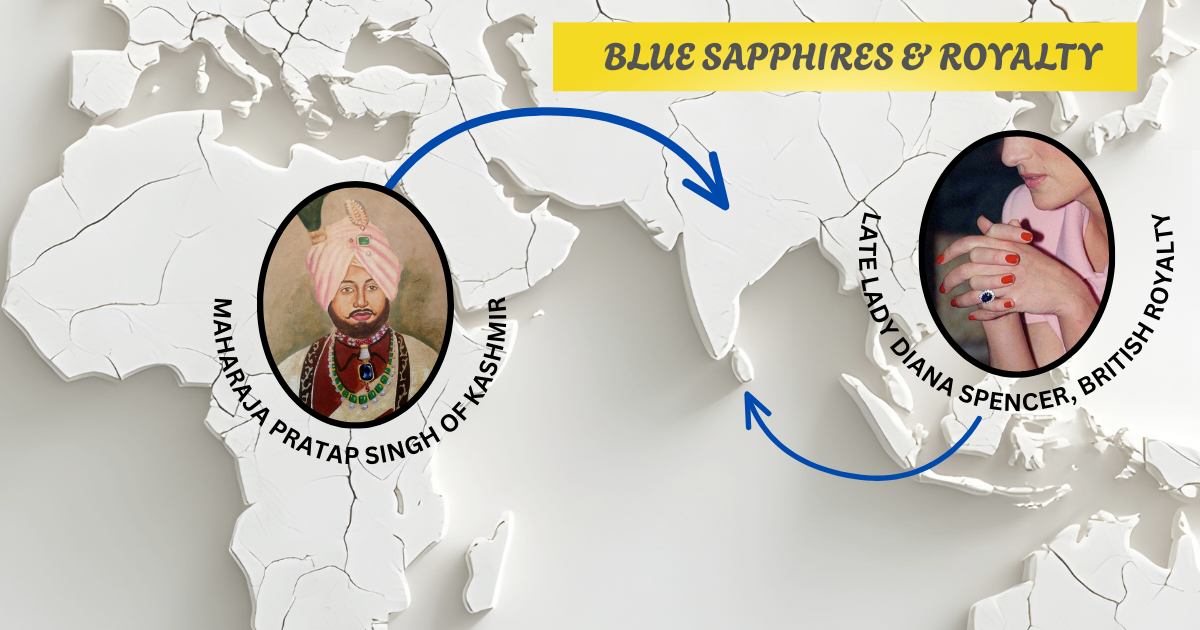
The Zanskar Crown Sapphire has gained much interest within the gemstone community but, remains elusive to this day. Some reports mention how, this big cushion cut blue sapphire exited the treasury of the Kashmir Maharajas. Apparently, it was Maharaja Pratap Singh, who sold the big Kashmir sapphire to generate funds for the development of the Kashmir region.
While more details related to the Zanskar Crown Sapphire are eagerly awaited, gem enthusiasts claim that this Kashmir sapphire could showcase, the unparalleled quality of the Kashmir deposit.
THE SPIRIT OF KASHMIR SAPPHIRE
The Spirit of Kashmir Sapphire is one of the most remarkable sapphires ever recorded, celebrated not only for its beauty but also for its place in gemstone history. This extraordinary gem weighs 150.13 carats (30.026 grams), making it the largest Kashmir sapphire officially recognized in the Guinness World Records as of November 10, 2023.
What sets the Spirit of Kashmir Sapphire apart is its deep cornflower blue color and velvety appearance, hallmark traits of sapphires from the historic Kashmir deposits. The gem’s unique texture and hue result from a fine network of rutile inclusions, which diffuse light within the stone and create a soft, glowing richness rather than sharp brilliance.
Beyond its physical attributes, the Spirit of Kashmir Sapphire stands as a symbol of rarity and prestige, embodying the legendary allure of Kashmir sapphires and setting a benchmark for collectors and connoisseurs worldwide.
Both the Zanskar and Spirit of Kashmir sapphires serve as reminders that some gemstones are not merely jewelry but treasures of geological history, carrying within them clues to the Earth’s deep processes.
LADY DIANA’S CEYLON SAPPHIRE RING
Perhaps no modern gemstone story is as globally recognized as Princess Diana’s blue sapphire engagement ring. The ring features a stunning oval-cut blue sapphire surrounded by diamonds and was later inherited by Catherine, Princess of Wales. What makes this gem even more remarkable is its origin: the oval blue sapphire came from Ceylon (now Sri Lanka).
This connection underscores Sri Lanka’s long-standing reputation for producing sapphires that capture both the imagination and the admiration of royalty. The ring helped propel blue sapphire engagement rings into the mainstream, inspiring countless replicas and tributes around the world.
SAPPHIRES – MAHARAJAS TO MODERN MONARCHS
Throughout history, blue sapphires have been linked to royalty and nobility. In Kashmir, the Maharajas (princes) of the region were among the earliest patrons of these rare gems, wearing or commissioning jewelry that showcased deep blue stones. References like the Zanskar Crown Sapphire, help solidify Kashmir’s reputation among global gem traders in the early part of the 20th century.
Beyond India, European and British royalty also prized sapphires. Lady Diana’s ring with a Ceylon blue sapphire is perhaps the most famous example in recent memory, but sapphires have adorned crowns, tiaras, pendants, and brooches across continents and centuries.
SOME SAPPHIRE INCLUSIONS ADD VALUE
In gemology, inclusions are often viewed as flaws, yet in the case of Kashmir blue sapphires, fine rutile needles play a starring role in creating their characteristic velvety effect. These microscopic inclusions cause light to scatter, dulling surface reflections and producing a rich, even color that seems to glow from within.
Conversely, Ceylon sapphires are prized when they show transparency and purity, with few visible inclusions. In this case, high clarity enhances brilliance and sparkle, which many buyers find particularly attractive. This contrast illustrates how different inclusion types and concentrations can enhance value differently, depending on the gem’s source and the market’s aesthetic preferences.
QUICK NOTES
Blue sapphires are not just beautiful gemstones—they are storied relics of the Earth, woven into human history through royalty, artistry, and geology. From the radiant clarity of Ceylon’s sapphires, exemplified by Lady Diana’s iconic engagement ring, to the velvety depths of Kashmir’s legendary stones such as the Zanskar Crown and Spirit of Kashmir sapphires, each source tells a unique story.
Understanding these stories—geological, cultural, and historical—enriches our appreciation of these extraordinary gems and helps explain why they remain among the most sought-after treasures in the world of fine jewelry.